Somerville Parking and Leasing Reality
Why parking expectations shape listing performance, tenant fit, and retention in Somerville rentals.
Parking in Somerville is rarely a side detail. For many renters, it shapes the whole decision about whether a unit feels practical. Owners who handle the topic casually often create mismatched inquiries, tenant frustration, and avoidable renewal tension later.
A good leasing process does not need to solve citywide parking. It needs to explain the property honestly and screen for whether the renter's habits fit the actual setup.
Parking should be described as an operating fact
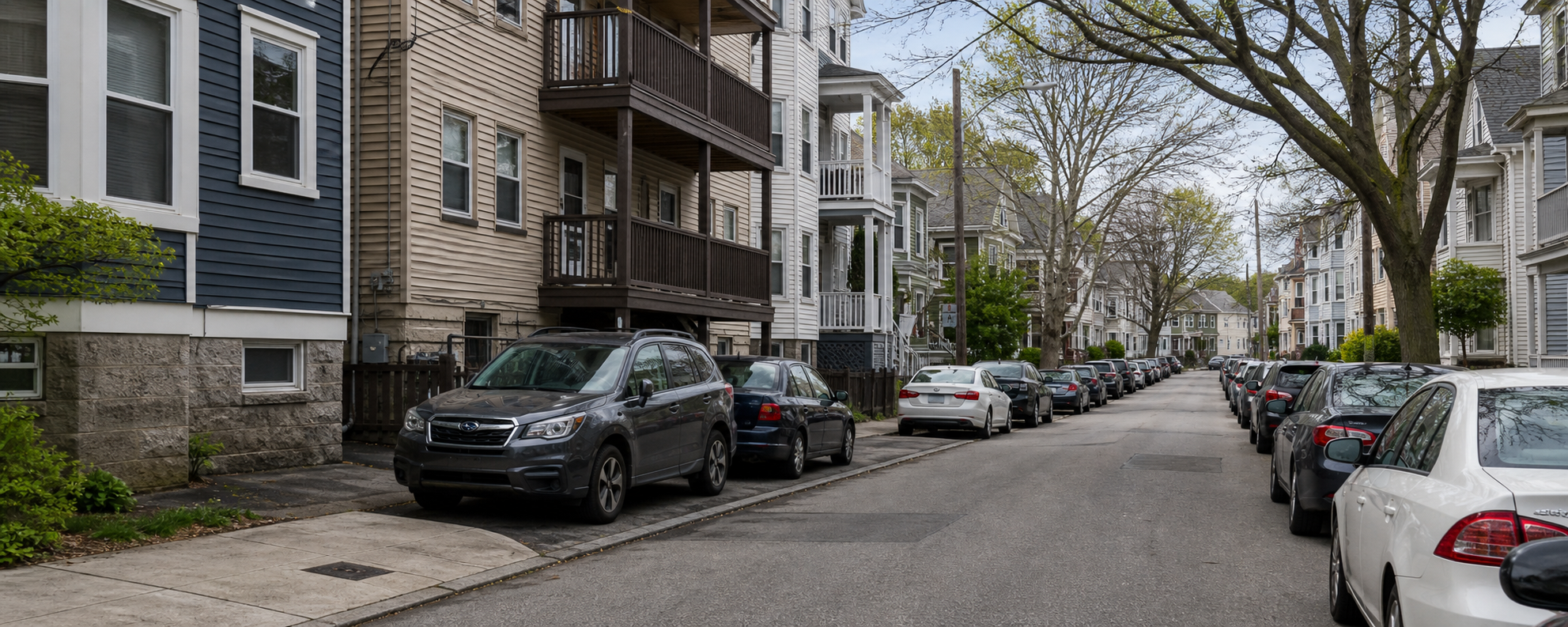
Listings often lose credibility when they imply parking is easier than it is. If a unit has no off-street space, limited tandem access, or a driveway that requires coordination, that should be presented clearly from the start.
The goal is not to scare renters away. It is to attract the renters who can live comfortably with the real arrangement.
Specific wording improves screening
Clear notes about driveway format, street parking dependence, and any access constraints help prospects self-select before the showing stage.
Photos can support the explanation
Exterior images showing the actual parking setup are often more useful than broad neighborhood claims when renters are deciding quickly.
Tenant expectations need to be set before move-in
Parking stress often comes from assumptions. A tenant may hear that street parking exists and assume the experience will be simple, or see a driveway and assume exclusive use that was never actually offered.
Owners should use the lease and move-in process to explain where vehicles can go, how shared access works, and what communication is expected if multiple tenants depend on the same area.
Shared driveways need explicit rules
If one vehicle blocks another, routine coordination quickly becomes a management issue. Clear rules reduce conflict before habits form.
Parking affects guest and delivery behavior too
Owners should think about how guests, maintenance vendors, and move-in activity interact with a tight site plan rather than focusing only on the leaseholder's daily use.
Pricing should reflect the real convenience level
A rental with easy off-street parking offers a different lifestyle than one where tenants depend entirely on curb availability. That difference should influence pricing decisions along with condition, transit, and layout.
Owners who price as if parking were a non-issue may get initial inquiry volume but slower commitment once the practical details become clear.
Comps need parking context
A nearby unit is not truly comparable if it includes easier parking or a more manageable driveway arrangement. Local pricing should account for those operational differences.
Renewal conversations should revisit the experience
If parking has been a recurring frustration, renewal season is the moment to decide whether building rules, communication, or pricing need adjustment.
Management can turn a friction point into a known system
Parking will not become effortless in every Somerville location, but it can become more predictable. A manager can help document the setup, communicate expectations clearly, and resolve repeat misunderstandings before they harm retention.
That kind of structure is especially useful for multifamily properties where tenant habits overlap in driveways, curbside loading, or move-in timing.
The best outcome is fit, not perfection
Owners do not need every renter to love the parking arrangement. They need the right renter to understand it and accept it before signing.
Small operational details matter
Move-in instructions, snow-removal expectations, and how vendors should access the site can all reduce recurring parking confusion.
FAQ
Why is parking such a major leasing issue in Somerville?
Because many renters weigh car use, shared driveways, and curb availability as part of whether the unit fits their daily routine, not as a minor afterthought.
How should owners describe parking in a listing?
Use direct language about off-street spaces, driveway sharing, and whether the renter will depend on street parking so prospects understand the real setup.
Can property management help reduce parking complaints?
Yes. Clear lease language, move-in communication, and consistent follow-up can reduce friction around parking use and shared access.
Market the property you actually have
Parking can either sharpen tenant fit or create avoidable problems, depending on how clearly the owner handles it. In Somerville, precision usually beats optimistic marketing.
If parking keeps complicating your lease-ups or renewals, a local rental analysis can help reset the strategy.
Related owner pages